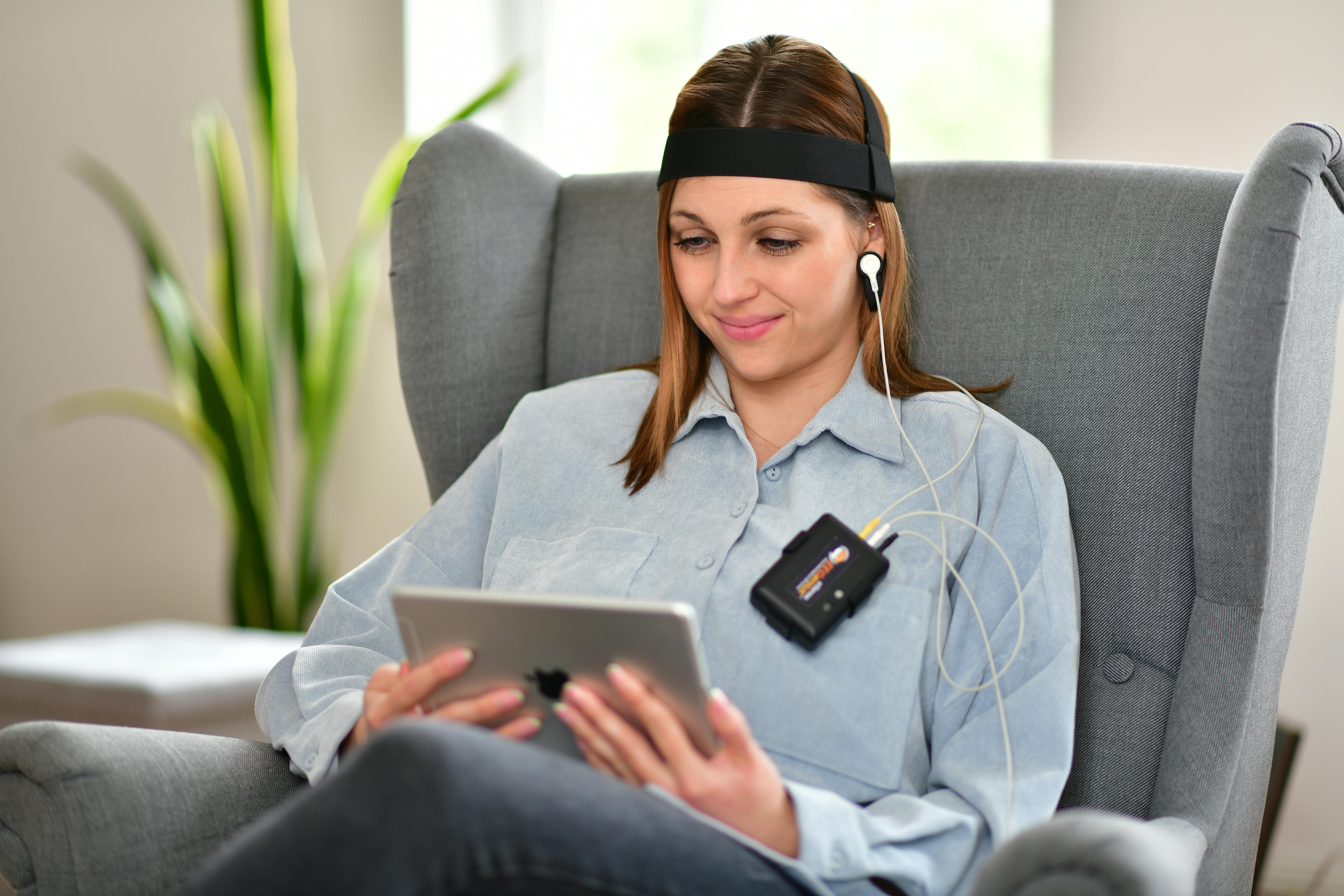
RASMi is an advanced tool that utilises brain signals recorded via electroencephalography (EEG) to assess resilience levels in individuals. This solution leverages EEG’s cost-effectiveness, ease of use, and applicability across various settings, including healthcare and workplace environments. By focusing on brain activity, RASMi offers a non-invasive and objective means of evaluating resilience, addressing the shortcomings of traditional questionnaires that can be time-consuming and biased. This makes it a practical option for both clinical and non-clinical users.
Existing methods for assessing resilience, particularly through questionnaires, are often tedious and may lead to biased results due to social stigma surrounding mental health. These traditional assessments are static and fail to capture the dynamic nature of resilience as it changes over time or under different conditions. The lack of real-time data collection and the subjective nature of responses limit the effectiveness of these methods in predicting or managing mental health risks.
RASMi is built upon a single-modality EEG system that collects data from individuals during both resting and task-oriented conditions. By applying artificial intelligence (AI) classifiers to this data, the system predicts resilience levels with high accuracy, identifying effective connectivity neuromarkers. This portable, cost-effective solution is designed for both clinical and non-clinical environments, providing a long-lasting, reusable tool for assessing mental resilience. Its innovative approach eliminates the need for more expensive and complex systems like fMRI while still offering high precision and practical insights.
RASMi addresses these limitations by using EEG signals to provide real-time data on resilience levels. By analysing brain activity, it can predict mental health risks with over 90% accuracy, offering a more objective and dynamic understanding of how individuals adapt to stress and adversity. This data-driven solution is not only more reliable than questionnaires but also offers cost savings compared to fMRI, making it accessible and practical for a wide range of users, from healthcare professionals to workplace wellness programs.
RASMi stands out due to its non-invasive nature, affordability, and portability. Unlike traditional mental health assessments, it requires no external expert interpretation and can be easily deployed in a variety of settings. The system’s accuracy, combined with its ability to provide real-time data, makes it far superior to questionnaire-based methods. Additionally, the low cost and long lifespan of the EEG system (up to 10 years) ensure that it remains a sustainable and cost-effective option for continuous mental health monitoring.